

If you have ever stood at the H-E-B pharmacy counter on Bellaire, the Walgreens on Westheimer, or a CVS in Pasadena and watched the technician quote you a price that made your stomach drop — $521 for Eliquis, $556 for Farxiga, or worse for Stelara or Imbruvica — you already know the math that millions of Houston seniors do every month. Brand-name maintenance drugs for diabetes, blood-thinning, heart failure, autoimmune disease, and blood cancers have for years been the single biggest line item in many Medicare budgets, swallowing more than premiums, more than copays, more than groceries. After two decades of debate, that math is finally changing. Through the Inflation Reduction Act, Medicare has — for the first time in its 60-year history — directly negotiated prices with drug manufacturers, and the first negotiated prices took effect on January 1, 2026. You can read the full program overview on the CMS Medicare Drug Price Negotiation page.
This guide walks through both rounds of the program in plain language for Houston Medicare beneficiaries. We cover Round 1 — the 10 drugs whose negotiated Maximum Fair Prices (MFPs) took effect January 1, 2026 — and Round 2, the 15 additional drugs (including Ozempic, Wegovy, Rybelsus, Trelegy Ellipta, and Xtandi) whose negotiated prices take effect January 1, 2027. We explain how the MFP differs from what you actually pay at the pharmacy, how it interacts with the new $2,100 Part D out-of-pocket cap, what 2026 Houston Part D plans are doing with these drugs on their formularies, and what to look at this fall during the Annual Enrollment Period (AEP) if you take any of the 25 negotiated medications. Wise Insurance Agency sees this play out at the kitchen table every week with Houston and Harris County clients, and the practical answer is rarely the same as the headline. Read on for the part you don’t see on the news.
- 10 Round 1 drugs took effect January 1, 2026 — Maximum Fair Price discounts ranging from 38% (Imbruvica) to 79% (Januvia) off 2023 list prices.
- $1.5 billion in beneficiary out-of-pocket savings is what CMS estimates Round 1 will deliver to Medicare enrollees in 2026 alone.
- Round 2 adds 15 more drugs starting January 1, 2027, including Ozempic, Wegovy, Rybelsus, Trelegy Ellipta, Xtandi, and Pomalyst.
- The MFP is what Medicare pays, not what you pay. Your pharmacy cost-sharing depends on your Part D plan’s deductible, tier placement, and coinsurance.
- $2,100 Part D out-of-pocket cap in 2026 protects you from runaway drug spending — once you hit it, you pay $0 for covered Part D drugs the rest of the year.
- 71% Ozempic / Wegovy / Rybelsus discount takes effect January 2027 (semaglutide MFP $274 vs ~$1,000 list).
What this guide covers
- What is Medicare drug price negotiation, and why now?
- Round 1 — the 10 drugs whose prices already dropped on January 1, 2026
- How big are the discounts? List price vs MFP for all 10
- What Houston Part D enrollees actually save at the pharmacy in 2026
- Round 2 — the 15 drugs added for January 2027
- Why Ozempic, Wegovy, and Rybelsus matter for Houston seniors
- How the MFP interacts with the $2,100 Part D cap and your plan’s tier
- What Round 1 prices look like inside a 2026 Houston Part D plan
- What you should do at AEP this fall if you take a negotiated drug
- Frequently asked questions
What is Medicare drug price negotiation, and why now?
Medicare drug price negotiation is exactly what the name says: the federal Medicare program now sits across the table from the manufacturers of certain high-spend, brand-name drugs and negotiates a single price — the Maximum Fair Price (MFP) — that applies to those drugs for Medicare beneficiaries nationwide. The Inflation Reduction Act of 2022 created the authority. The first round of negotiations was completed in 2024, the prices were announced, and as of January 1, 2026, those prices are live for Medicare Part D enrollees in Houston, in the rest of Texas, and in every other state.
Until 2026, Medicare was the only major payer in the United States legally barred from directly negotiating drug prices. The Department of Veterans Affairs negotiated. Medicaid negotiated. Every commercial insurer negotiated through pharmacy benefit managers. Medicare paid sticker price. That single fact is why a 30-day supply of Eliquis on a Texas Part D plan could cost $521 in list price while the same drug carried much lower negotiated rates outside the United States.
The negotiation framework is narrow and deliberate. Drugs are selected based on Medicare spending — the highest-spend single-source brand drugs without generic or biosimilar competition. Manufacturers and CMS enter a structured negotiation; if the manufacturer refuses to negotiate, an excise tax kicks in. The negotiated MFP becomes the payment Medicare and Part D plans owe the manufacturer for that drug. The Kaiser Family Foundation maintains a clear policy explainer at KFF’s Key Facts about Medicare Drug Price Negotiation.
For background on how Part D fits with the rest of Medicare, our Medicare overview and Medicare Eligibility pages cover the basics. The negotiation program does not change who is eligible for Medicare. It changes what certain Medicare-covered drugs cost on the back end.
Round 1 — the 10 drugs whose prices already dropped on January 1, 2026
Round 1 covers ten brand-name drugs across diabetes, cardiovascular disease, autoimmune conditions, and blood cancer. These are not obscure niche products — they are the most-dispensed and most-spent-on drugs in Medicare Part D. Every one of them is filled thousands of times a month at Houston-area pharmacies. The Round 1 fact sheet from CMS lays out the program scope at CMS — Medicare Drug Price Negotiation Program: Negotiated Prices for Initial Price Applicability Year 2026.
The Round 1 lineup, by clinical category:
- Type 2 diabetes: Januvia, Farxiga, Jardiance
- Type 1 + Type 2 diabetes (insulin): Fiasp / NovoLog
- Heart failure: Entresto, Farxiga, Jardiance (the SGLT2 inhibitors are dual-indicated)
- Blood clots / stroke prevention: Eliquis, Xarelto
- Autoimmune conditions: Enbrel (rheumatoid arthritis, psoriasis), Stelara (psoriasis, Crohn’s, ulcerative colitis)
- Blood cancers: Imbruvica (chronic lymphocytic leukemia, mantle cell lymphoma)
If you live in Harris County and take an Eliquis, an Entresto, a Jardiance, or a Januvia daily — you are taking a Round 1 drug. The negotiated price is now baked into your 2026 Part D plan’s economics whether you noticed or not.
How big are the discounts? List price vs MFP for all 10
The headline numbers are striking. Discounts on Round 1 drugs range from 38% on the low end (Imbruvica) to 79% on the high end (Januvia), measured against 2023 list prices on a 30-day supply basis. Here is the full Round 1 list with the verified CMS numbers:
| Drug | Treats | 2023 list price (30-day) | 2026 MFP (30-day) | Discount |
|---|---|---|---|---|
| Januvia | Type 2 diabetes | $527 | $113 | 79% |
| Fiasp / NovoLog | Type 1 + 2 diabetes (insulin) | $495 | $119 | 76% |
| Farxiga | Diabetes, heart failure, CKD | $556 | $178 | 68% |
| Enbrel | Rheumatoid arthritis, psoriasis | $7,106 | $2,355 | 67% |
| Jardiance | Diabetes, heart failure, CKD | $573 | $197 | 66% |
| Stelara | Psoriasis, Crohn’s, UC | $13,836 | $4,695 | 66% |
| Xarelto | Blood clots / stroke prevention | $517 | $197 | 62% |
| Eliquis | Blood clots / stroke prevention | $521 | $231 | 56% |
| Entresto | Heart failure | $628 | $295 | 53% |
| Imbruvica | Blood cancers (CLL, MCL) | $14,934 | $9,319 | 38% |
The CMS estimate for Round 1 is roughly $6 billion in 2026 savings to the Medicare program and roughly $1.5 billion in out-of-pocket savings for beneficiaries. Those numbers come from the U.S. Department of Health and Human Services’ Office of the Assistant Secretary for Planning and Evaluation; the full analysis is at ASPE — Medicare Prices Negotiated for 2026.
The chart below sorts all ten Round 1 drugs by discount percentage so you can see the spread at a glance:
What Houston Part D enrollees actually save at the pharmacy in 2026
For Houston seniors, the Round 1 changes show up in three places on a typical Part D claim: the deductible phase, the initial coverage phase, and the catastrophic phase (now the post-cap zone). Texas has roughly 4.5 million Medicare beneficiaries, and Harris County alone is home to hundreds of thousands of them, making it one of the largest concentrated populations of Round-1-affected patients in the country.
What changes for the patient day-to-day:
- Deductible phase. If your 2026 Part D plan has a deductible (many do, up to the 2026 federal maximum), you pay the lower MFP-anchored price out of pocket until you hit the deductible. A 30-day Eliquis fill that used to count $521 against your deductible now counts closer to $231 — meaning the deductible burns down more slowly, but each fill costs less.
- Initial coverage phase. Most plans assign Round 1 drugs to a preferred-brand or specialty tier. The copay or coinsurance is now applied against the negotiated price. A 25% coinsurance on Eliquis is now 25% of $231 (about $58) rather than 25% of $521 (about $130).
- Out-of-pocket cap protection. The 2026 Part D out-of-pocket cap is $2,100 (up from $2,000 in 2025). Once your true out-of-pocket spending hits $2,100, you pay $0 for covered Part D drugs the rest of the calendar year. The full cap fact sheet is at Medicare.gov — Part D costs.
Combined effect: a Houston retiree who was paying meaningful out-of-pocket on a Round 1 drug in 2025 is, in 2026, both paying less per fill and reaching the $2,100 cap less often (because the per-fill price contributing to the cap is lower). That is the structural mechanism behind the $1.5 billion aggregate beneficiary savings figure.
The exact dollar effect on your particular fill depends on three things only your plan’s drug list (formulary) and benefits document will tell you: deductible amount, tier placement of your drug, and whether your plan applies copay or coinsurance on that tier. This is one of the conversations our team has most often during AEP at our North Houston office and our South Houston office.
Round 2 — the 15 drugs added for January 2027
On January 17, 2025, HHS announced the Round 2 list — 15 additional drugs whose negotiated MFPs take effect January 1, 2027. The Round 2 list dramatically expands the program’s reach into oncology, respiratory disease, GLP-1 receptor agonists for diabetes and weight management, neurology, and gastroenterology. The official announcement is at HHS — 15 Additional Drugs Selected for Medicare Drug Price Negotiations.
| Drug (brand variants) | Treats | Effective date |
|---|---|---|
| Ozempic / Rybelsus / Wegovy (semaglutide) | Type 2 diabetes / weight management / cardiovascular risk reduction | Jan 1, 2027 |
| Trelegy Ellipta | COPD, asthma | Jan 1, 2027 |
| Xtandi | Prostate cancer | Jan 1, 2027 |
| Pomalyst | Multiple myeloma | Jan 1, 2027 |
| Ibrance | Breast cancer | Jan 1, 2027 |
| Ofev | Pulmonary fibrosis | Jan 1, 2027 |
| Linzess | IBS-C, chronic constipation | Jan 1, 2027 |
| Calquence | Chronic lymphocytic leukemia | Jan 1, 2027 |
| Austedo / Austedo XR | Huntington’s, tardive dyskinesia | Jan 1, 2027 |
| Breo Ellipta | Asthma, COPD | Jan 1, 2027 |
| Tradjenta | Type 2 diabetes | Jan 1, 2027 |
| Xifaxan | IBS-D, hepatic encephalopathy | Jan 1, 2027 |
| Vraylar | Schizophrenia, bipolar disorder, MDD adjunct | Jan 1, 2027 |
| Janumet / Janumet XR | Type 2 diabetes | Jan 1, 2027 |
| Otezla | Psoriasis, psoriatic arthritis, Behçet’s | Jan 1, 2027 |
A subset of Round 2 prices have been published in CMS materials. The verified ones are:
- Ozempic / Rybelsus / Wegovy (semaglutide): MFP $274 per 30-day supply, a 71% discount off a list price near $1,000.
- Trelegy Ellipta: MFP $175 per 30-day supply, a 73% decrease.
- Xtandi: MFP $7,004 per 30-day supply, a 48% discount.
For the other twelve Round 2 drugs, CMS has not yet published prices in a single uniform table at the time of writing; we will not estimate or guess. If you take Pomalyst, Ibrance, Ofev, Linzess, Calquence, Austedo, Breo Ellipta, Tradjenta, Xifaxan, Vraylar, Janumet, or Otezla, the negotiated price applies January 1, 2027 — confirm the specific MFP for your drug closer to that date with your Part D plan or with our office.
Round 2’s program-wide impact dwarfs Round 1: roughly $12 billion in Medicare program savings (vs 2024 net prices) and roughly $685 million in beneficiary out-of-pocket savings in the first effective year. The expansion into the GLP-1 class — with semaglutide alone accounting for tens of billions of dollars of pharmaceutical spending globally — is the single largest mover.
Why Ozempic, Wegovy, and Rybelsus matter for Houston seniors
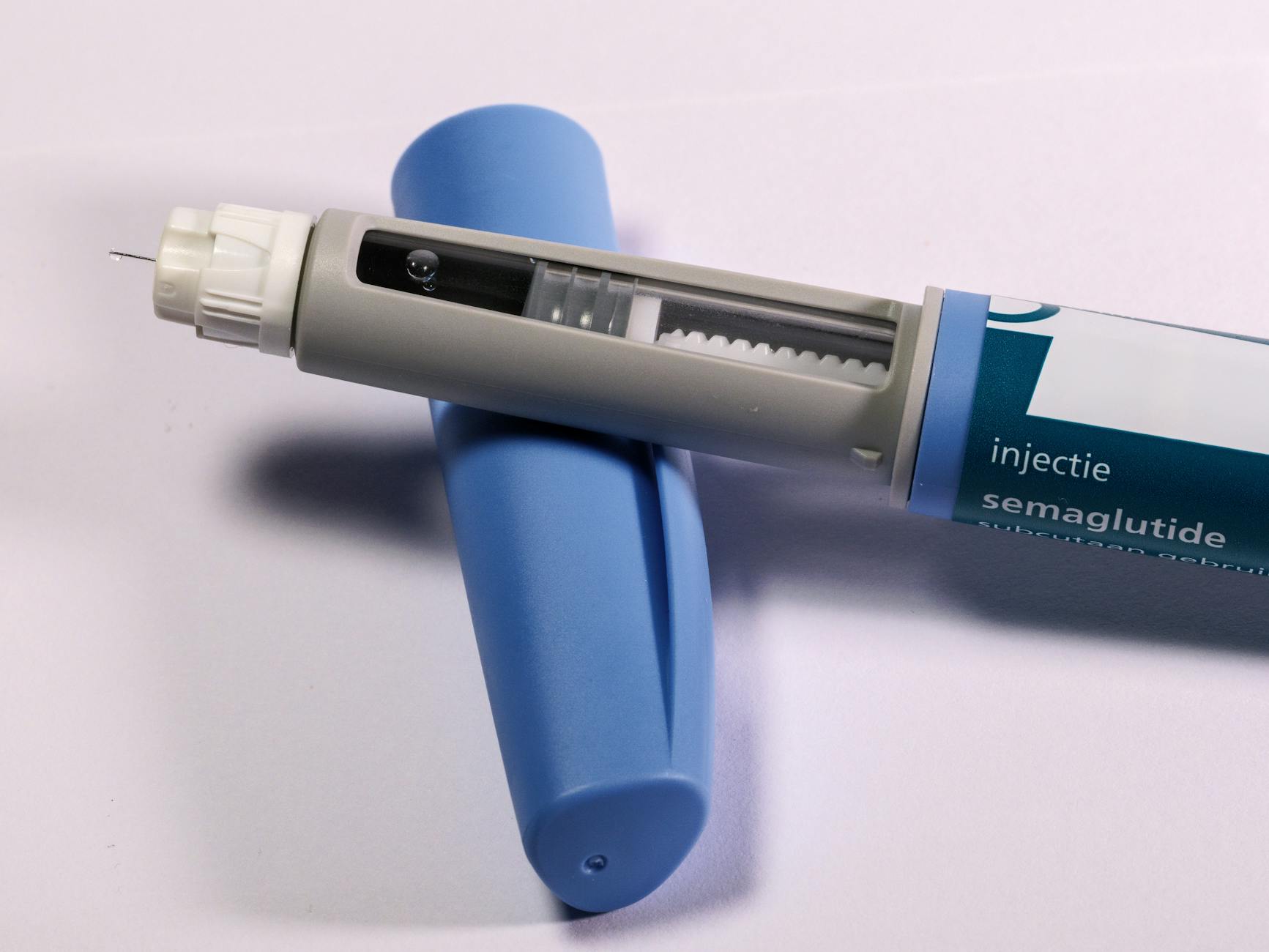
Semaglutide — sold under three brand names, Ozempic (subcutaneous, Type 2 diabetes), Rybelsus (oral, Type 2 diabetes), and Wegovy (subcutaneous, weight management) — is the highest-profile GLP-1 medication of the last decade. The three brands share an active ingredient and were treated as a single negotiation entity, which is why a single MFP applies.
For Houston seniors specifically, several things are worth understanding before 2027 arrives:
- Medicare’s coverage of weight-loss-only indications is limited. Historically, Medicare Part D has been statutorily prohibited from covering medications used solely for weight loss. Ozempic and Rybelsus are covered when prescribed for Type 2 diabetes. Wegovy has been added to coverage in certain plans when prescribed for cardiovascular risk reduction in patients with established heart disease and obesity, following an FDA expanded indication. Each plan’s formulary handles this differently — confirm with your plan.
- The negotiated MFP applies regardless of indication when the plan covers the drug. So if your plan covers Ozempic for your Type 2 diabetes today, the 2027 MFP-driven price reset applies to that fill.
- Cost-sharing and tier placement remain plan-by-plan decisions. Even with a 71% MFP discount, a plan can put semaglutide on a non-preferred or specialty tier with higher coinsurance. Where the drug sits on the tier ladder matters as much as the MFP for what you pay.
How the MFP interacts with the $2,100 Part D cap and your plan’s tier
This is the part of the program that confuses the most readers. The Maximum Fair Price is not your copay. It is the price the plan pays the manufacturer for that drug. Your share of the cost is determined by the plan’s benefit design — deductible, tier, coinsurance, copay structure — applied against the lower negotiated price.
Three rules make the math tractable:
- The Part D out-of-pocket cap is $2,100 in 2026. Once your true out-of-pocket spending on Part D drugs reaches $2,100, you pay nothing for covered Part D drugs for the rest of the calendar year. The cap is indexed and will adjust modestly in 2027.
- The MFP shrinks how fast you reach that cap — for some, in a good way; for others, less so. If your plan’s coinsurance on a Round 1 drug is 25%, the absolute dollars you pay per fill have dropped, which means each fill burns less of your $2,100 cap. You may not reach the cap as quickly. For people who used to hit the cap by April or May, the practical effect can be that lower per-fill costs spread out across the year (rather than reaching the cap and then paying $0).
- Tier placement still drives most of the practical experience. A plan can still place a Round 1 drug on a higher tier with higher coinsurance. The MFP discount becomes the floor against which that coinsurance is calculated, but the tier is what determines whether you pay 10%, 25%, or 33%. Always confirm tier placement before you select a plan.
The Medicare Prescription Payment Plan (MPPP, sometimes called M3P) is also worth knowing about. Started January 1, 2025 and continuing in 2026, this opt-in program lets you pay $0 at the pharmacy and instead receive a monthly bill from your Part D plan, with no interest and no fees. It is most useful for beneficiaries who hit large costs early in the year — for example, a January refill of a specialty Round 1 drug like Stelara or Imbruvica. All Part D plans are required to offer it. Details at Medicare.gov — Prescription Payment Plan.
What Round 1 prices look like inside a 2026 Houston Part D plan
The 2026 Part D plan landscape in Harris County still includes a wide range of stand-alone PDP and Medicare Advantage Prescription Drug (MA-PD) plans. Each one chose how to integrate the Round 1 drugs into its 2026 formulary. The patterns we are seeing:
- Most major Houston-area plans place Eliquis, Xarelto, Januvia, Jardiance, Farxiga, and Entresto on their preferred-brand tier. That generally means a fixed-dollar copay (often in the $40-$50 range for a 30-day supply) once the deductible is met.
- Enbrel, Stelara, and Imbruvica are typically on specialty tiers, where coinsurance (often 25-33%) applies. The new MFP shrinks the absolute dollars dramatically — but specialty-tier coinsurance on Imbruvica’s $9,319 MFP is still in the thousands per fill until you reach the $2,100 cap.
- Fiasp and NovoLog continue to be subject to the $35/month Part D-covered insulin cap, which is unchanged in 2026 and is the binding cost-sharing limit for those products regardless of MFP.
For a structural overview of stand-alone Part D versus MA-PD options, see our Medicare Plans page; for Medicare Advantage specifically, see Medicare Advantage; for Medigap (which does not cover prescription drugs but pairs with stand-alone Part D), see Medicare Supplement Plans.
| Program metric | Round 1 (2026) | Round 2 (2027) |
|---|---|---|
| Drugs negotiated | 10 | 15 |
| Effective date | January 1, 2026 | January 1, 2027 |
| Estimated Medicare program savings | ~$6 billion | ~$12 billion (vs 2024 net prices) |
| Estimated beneficiary OOP savings | ~$1.5 billion | ~$685 million |
| Discount range | 38% – 79% | Reported 48% – 73% on published drugs |
What you should do at AEP this fall if you take a negotiated drug
The 2026 Annual Enrollment Period (October 15 – December 7, 2026) is the window where you choose your 2027 Part D or MA-PD plan. If you take any of the 25 negotiated drugs, this AEP matters more than usual. Five questions to answer before you pick:
- Is my drug on the plan’s 2027 formulary? A plan can drop a drug or move it to a different tier between plan years. Check the Annual Notice of Change document your current plan mails in late September.
- What tier is my drug on? Preferred brand vs non-preferred brand vs specialty drives most of what you pay. The MFP sets the floor, the tier sets the multiplier.
- Does the plan use copay or coinsurance on that tier? A flat copay protects you from price swings; coinsurance lets the savings flow through more directly but exposes you to remaining variability.
- What is the deductible? Some Houston-area Part D plans waive the deductible on preferred-brand tiers. If your Round 1 drug is on a preferred tier with no deductible, you start saving on day one of the year.
- Is my Houston pharmacy in-network and preferred? Most carriers operate two pharmacy networks — preferred (lower cost-sharing) and standard. Confirm H-E-B, Kroger, Walgreens, CVS, Walmart, or your independent pharmacy is on the preferred list for that plan.
Take a negotiated drug? Let’s check your 2026 plan and prep your 2027 options.
Wise Insurance Agency helps Houston seniors compare 2026 Part D and MA-PD plans, confirm tier placement on Round 1 drugs, and plan ahead for the 15 Round 2 drugs taking effect January 1, 2027.
Call our Houston offices 832-400-6538Frequently asked questions
Will I see the lower negotiated price right away at the pharmacy?
Does drug price negotiation apply to Medicare Advantage drug coverage?
When do Round 2 prices kick in?
What if my plan still puts the drug on a high tier?
Are GLP-1 weight-loss drugs like Ozempic and Wegovy covered by Medicare?
What about generic and biosimilar versions of the negotiated drugs?
How is the negotiated price actually enforced?
Sources
- CMS — Medicare Drug Price Negotiation Program: Selected Drugs and Negotiated Prices (accessed May 2026).
- CMS — Negotiated Prices for Initial Price Applicability Year 2026 (Round 1 fact sheet) (accessed May 2026).
- HHS — HHS Announces 15 Additional Drugs Selected for Medicare Drug Price Negotiations (accessed May 2026).
- ASPE — Medicare Prices Negotiated for 2026 (accessed May 2026).
- Kaiser Family Foundation — Key Facts about Medicare Drug Price Negotiation (accessed May 2026).
- Kaiser Family Foundation — FAQs about the Inflation Reduction Act’s Medicare Drug Price Negotiation Program (accessed May 2026).
- Medicare.gov — Part D costs and the $2,100 out-of-pocket cap (accessed May 2026).
- Medicare.gov — Medicare Prescription Payment Plan (accessed May 2026).
- Texas Department of Insurance — tdi.texas.gov (accessed May 2026).
Wise Insurance Agency is a licensed insurance agency in the State of Texas. The information here is general guidance and not a substitute for plan-specific advice. We do not offer every plan available in your area. Any information we provide is limited to those plans we do offer in your area. Please contact Medicare.gov, 1-800-MEDICARE, or your local State Health Insurance Assistance Program (SHIP) to get information on all of your options. Plan availability, premiums, formularies, tiers, and networks change annually. Medicare-negotiated prices and Maximum Fair Prices reflect federal program data as published by CMS and HHS as of the date this article was written; verify current rules with your plan, with CMS, or with a licensed agent before making any election.