
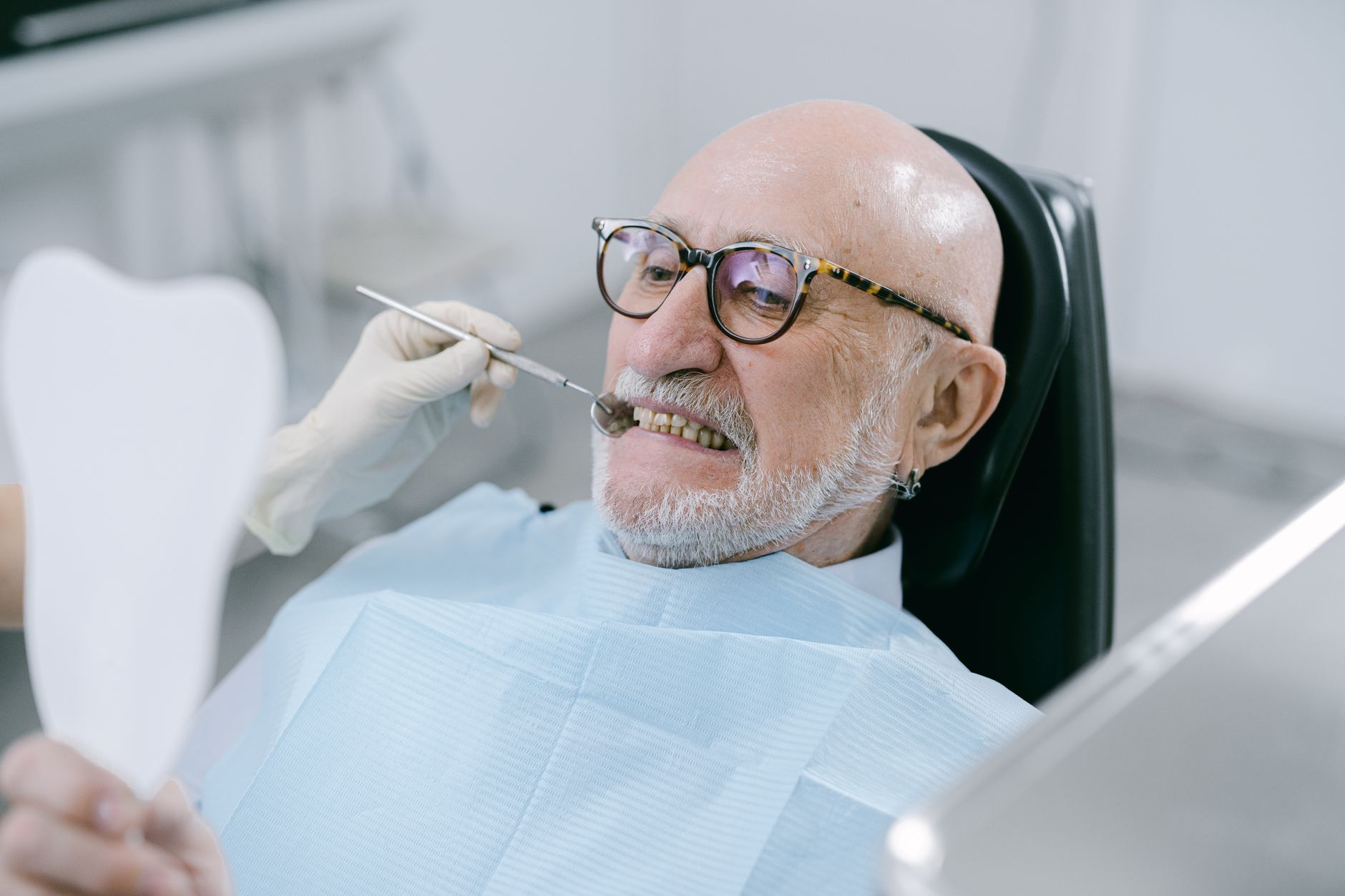
Ask ten Houstonians who are new to Medicare what surprised them most, and a striking number will land on the same thing: they assumed Medicare would pay for their teeth, their eyes, and their ears. It feels reasonable — you have paid into the system your whole working life, and a cleaning, a new pair of glasses, or a hearing aid are among the most ordinary things an older adult needs. Yet Original Medicare (Parts A and B) does not cover routine dental, vision, or hearing care. Not the cleaning, not the exam for glasses, not the hearing aids. For many people that gap is the single biggest shock of their first year on Medicare, and it usually arrives at the worst possible moment — standing at the front desk with a bill in hand.
This is exactly why so many people in Harris County lean toward Medicare Advantage (MA). Nearly every MA plan bundles in dental, vision, and hearing (often shortened to DVH) as “extra” or supplemental benefits, and those benefits are one of the top reasons people pick Advantage over Original Medicare with a supplement. But here is the part the glossy AEP mailers tend to bury: DVH coverage in Medicare Advantage varies enormously from plan to plan. Annual dollar caps, in-network requirements, what counts as “routine” versus “medical,” waiting periods, and fine print all shape how much the benefit is actually worth to you. A plan that advertises a dental benefit is not the same as a plan that will pay for the crown you need next spring. This guide, written for Houston beneficiaries shopping ahead of the Annual Enrollment Period, explains precisely what Original Medicare does and does not cover, the narrow medical exceptions it does pay for, how MA plans structure DVH, the common traps, and how to weigh these benefits honestly. Start anytime at our Medicare hub.
- Original Medicare does not cover routine dental, vision, or hearing. That means no routine cleanings, fillings, dentures, eye exams for glasses, eyeglasses, contact lenses, or hearing aids — per Medicare.gov.
- There are narrow medical exceptions. Medicare covers certain dental tied to another covered procedure, one pair of glasses or contacts after cataract surgery with an implanted lens, and doctor-ordered diagnostic hearing and balance exams.
- Nearly all Medicare Advantage plans include DVH. For 2026, KFF reports about 99% of individual MA plans offer vision, 98% offer dental, and 98% offer hearing benefits — but the scope of that coverage varies widely.
- The caps and rules are the real story. Dental benefits often carry an annual dollar maximum, and DVH benefits commonly use “use it or lose it” allowances, in-network requirements, and sometimes waiting periods.
- Do not choose a plan on DVH alone. A rich-sounding dental benefit means little if the plan drops your doctors or covers your drugs poorly — DVH is one factor among several.
- You have options either way. Standalone dental and vision plans, or Original Medicare plus a supplement with separate DVH coverage, can fit better for some Houston beneficiaries. Wise Insurance Agency helps you compare honestly.
What this guide covers
- The DVH gap in Original Medicare
- The narrow exceptions Medicare does cover
- How Medicare Advantage provides DVH
- The common limits and traps
- How annual caps and allowances really work
- Comparing DVH benefits honestly
- The alternatives to MA-bundled DVH
- How Wise Insurance Agency helps in Houston
- Frequently asked questions
1. The DVH gap in Original Medicare
Let us be exact about what Original Medicare leaves out, because the wording matters. According to Medicare.gov, in most cases Medicare does not cover routine dental care — that includes cleanings, fillings, tooth extractions, dentures, dental plates, and other dental devices. On the vision side, Original Medicare does not cover routine eye exams (sometimes called “refraction”) for the purpose of getting glasses or contacts, and it does not pay for eyeglasses or contact lenses in ordinary circumstances. And for hearing, Medicare does not cover hearing aids or the exams to fit them. For all three, the default rule is simple and unwelcome: you pay 100% of the cost.

Why the gap exists is partly historical. When Medicare was created in 1965, it was designed around hospital and physician care — the “medical” model of the era — and routine dental, vision, and hearing were treated as separate, largely out-of-pocket categories. That framing never fundamentally changed for Original Medicare. The result is that three of the most common needs in later life — a sore tooth, blurry reading vision, difficulty following conversation at a noisy Houston restaurant — sit almost entirely outside what Parts A and B will pay.
The dollars involved are not trivial. A single crown, a set of dentures, progressive lenses, or a pair of modern hearing aids can each run into the hundreds or thousands of dollars — and unlike a covered hospital stay, none of it counts toward any Medicare deductible or limit. That is the practical weight behind a benefit that sounds minor on paper. It is also why the DVH question deserves real attention when you plan your Medicare plan for the year, rather than being treated as an afterthought.
2. The narrow exceptions Medicare does cover
The blanket statement “Medicare doesn’t cover dental, vision, or hearing” is true for routine care, but it is not the whole story — and the exceptions matter, because they can save you money in specific medical situations. In each of the three categories, Original Medicare pays for a small, tightly defined set of services that are tied to a medical need rather than to ordinary maintenance.
Dental: when it is part of covered medical care
Medicare will cover certain dental services when they are an integral part of another covered procedure. Medicare.gov gives clear examples: an oral exam and necessary dental treatment before a heart valve replacement, or before a bone marrow, organ, or kidney transplant. Medicare may also cover dental services you receive when you are admitted to a hospital as an inpatient for a dental procedure that is complex or requires the hospital setting. The common thread is that the dental work is medically necessary and connected to a covered treatment — not a routine cleaning or filling.
Vision: cataract surgery and its aftermath
Vision has one of the most familiar exceptions. Original Medicare covers medically necessary eye care such as cataract surgery, and Medicare Part B covers one pair of eyeglasses with standard frames, or one set of contact lenses, after each cataract surgery that implants an intraocular lens. After you meet the Part B deductible, you generally pay 20% of the Medicare-approved amount for those corrective lenses, and coverage is limited to standard frames — you pay extra for upgrades. Medicare also covers certain medical eye care, like tests and treatment for conditions such as glaucoma or diabetic retinopathy for people at risk. What it does not cover is the routine refraction exam to update your everyday glasses prescription.
Hearing: diagnostic exams your doctor orders
For hearing, the line falls between “diagnostic” and “routine.” Medicare Part B covers diagnostic hearing and balance exams if your doctor or other provider orders them to see whether you need medical treatment — for example, to investigate dizziness, balance problems, or a medical hearing issue. After the Part B deductible you generally pay 20% of the approved amount. Since 2023, Medicare has also allowed you to see an audiologist once every 12 months without a physician’s order for certain non-acute diagnostic hearing tests. What remains excluded are hearing aids themselves and the exams performed specifically to fit them.
| Category | Not covered by Original Medicare | Narrow exception that IS covered |
|---|---|---|
| Dental | Routine cleanings, fillings, extractions, dentures, dental devices | Dental tied to a covered procedure (e.g., before a heart valve replacement or organ transplant); some inpatient dental |
| Vision | Routine eye exam for glasses; eyeglasses; contact lenses | Cataract surgery; one pair of standard glasses or one set of contacts after cataract surgery with an implanted lens; certain medical eye disease care |
| Hearing | Hearing aids; exams to fit hearing aids | Doctor-ordered diagnostic hearing and balance exams; once-yearly audiologist access for certain tests |
3. How Medicare Advantage provides DVH
Medicare Advantage plans are offered by private insurers approved by Medicare, and they must cover everything Original Medicare covers. What sets most of them apart is that they can also offer supplemental benefits — extras that Original Medicare does not provide — and dental, vision, and hearing are the most common of these by far. This is the core reason DVH is such a powerful draw for Advantage: the plan fills, at least partly, the exact gap that frustrates so many new beneficiaries.
Just how common are these benefits? According to KFF’s analysis of 2026 Medicare Advantage offerings, roughly 99% of individual MA plans offer some vision benefit, 98% offer some dental benefit, and 98% offer some hearing benefit. In a dense, competitive market like Harris County, that means nearly every Advantage plan you will see this AEP includes DVH in some form. But KFF is careful to add the crucial caveat: “Though these benefits are widely available, the scope of coverage for these services varies.” Availability is nearly universal; generosity is not.
In practice, a Medicare Advantage DVH benefit is structured as a defined set of services and dollar allowances rather than open-ended coverage. A dental benefit, for instance, may cover only preventive services (cleanings, exams, X-rays) at little or no added cost, or it may extend to “comprehensive” services like fillings, crowns, extractions, and dentures — usually with a cap on how much the plan pays each year. Vision benefits often include a routine eye exam plus an allowance toward frames or contacts. Hearing benefits typically include a routine hearing exam and an allowance toward hearing aids, sometimes through a specific manufacturer or supplier. The details differ from plan to plan and can change from one year to the next.
4. The common limits and traps
Because MA dental, vision, and hearing benefits are supplemental — extras the plan chooses to offer — they come wrapped in rules that Original Medicare’s core benefits do not have. Understanding these limits is the difference between a benefit that helps and a benefit that disappoints. Here are the ones that trip people up most often in Houston.
- Annual dollar maximums (caps). As KFF notes, a dental benefit “often is subject to an annual dollar cap on the amount covered by the plan.” Once the plan pays out its yearly maximum, you pay the rest yourself. A benefit that looks generous can be exhausted by a single crown or partial denture.
- “Use it or lose it” allowances. Vision and hearing allowances typically reset each calendar year and do not roll over. If you do not use this year’s frame allowance, it is gone on January 1 — it does not accumulate for a bigger purchase later.
- In-network requirements. Many DVH benefits only pay when you use the plan’s contracted dentists, optical shops, or hearing-aid suppliers. Going out of network can mean a reduced benefit or no coverage at all.
- Preventive vs. comprehensive tiers. A plan may cover preventive dental fully but pay only a percentage of comprehensive work — and that percentage still counts against the annual cap.
- Waiting periods. Some dental benefits, particularly for major services, may apply a waiting period before certain procedures are covered.
- Specific suppliers and models. Hearing-aid benefits are often tied to particular brands, models, or mail-order suppliers, which can limit your choice of device and provider.
| Common DVH limit | What it means | Why it matters to you |
|---|---|---|
| Annual dollar cap | Plan pays only up to a set amount per year for the benefit | Major work (crowns, dentures) can blow past the cap; you pay the balance |
| Use-it-or-lose-it allowance | Yearly allowance for frames or aids that resets and does not roll over | Unused benefit is forfeited; timing your purchases matters |
| In-network only | Coverage applies only with the plan’s contracted providers | Your current dentist or optician may not be covered |
| Coverage tiers | Preventive covered fully; comprehensive covered at a percentage | Big-ticket procedures cost more out of pocket than the brochure implies |
| Waiting period | Some services covered only after a set time on the plan | You may not be able to use the benefit immediately for major work |
5. How annual caps and allowances really work
The annual dollar cap is the most misunderstood feature of MA dental benefits, so it is worth walking through how it functions. A cap is the maximum the plan will pay toward your covered dental services in a plan year. Below the cap, the plan pays its share (which may itself be a percentage for comprehensive work); once total plan payments reach the cap, you are responsible for everything above it. The cap is the plan’s exposure, not yours — your exposure is whatever falls outside it.
The illustration below shows the mechanic with round, hypothetical numbers so you can see the shape of it. The specific cap amount and cost-sharing percentages differ by plan and by year, so treat this only as a model of how the pieces fit together — not as the terms of any particular plan.
Vision and hearing allowances work a little differently. Instead of a broad annual maximum on many services, they usually give you a fixed dollar amount toward a specific purchase — say, an allowance for frames or contacts, and a separate allowance toward hearing aids — often on a set schedule (for example, a new frame allowance each year and a hearing-aid allowance every so many years). The key questions are always the same: how much is the allowance, how often does it renew, does it roll over (usually not), and which providers or suppliers can you use it with?
6. Comparing DVH benefits honestly
Here is the balanced truth that a sales pitch will not give you: DVH benefits are a genuine advantage of Medicare Advantage for many people, and they are frequently narrower than they appear. Both things are true at once. The job at enrollment time is not to be dazzled by a long list of extras, nor to dismiss them, but to weigh them realistically against the parts of a plan that usually matter more — the medical network, the drug formulary, and your total expected cost for the year.
A useful way to think about it: your Medicare Advantage plan’s core job is to cover your doctors, hospitals, and prescriptions well. DVH is a valuable add-on, but a plan that nails the extras while missing your cardiologist or putting your medication on a punishing tier is still the wrong plan. So we rank the questions in that order — core coverage first, DVH as a tiebreaker and a source of real but bounded value.
| Question to ask about a DVH benefit | Why it matters |
|---|---|
| What is the annual dollar cap for dental? | It sets the ceiling on what the plan pays; major work can exceed it fast |
| Does it cover comprehensive dental, or just preventive? | Determines whether fillings, crowns, and dentures are covered at all |
| Are my dentist, optician, and audiologist in network? | Out-of-network care may not be covered |
| How large are the vision and hearing allowances, and how often do they renew? | Tells you the real value and timing of frames or hearing-aid help |
| Is there a waiting period for major services? | You may not be able to use the benefit right away |
| Can the plan change the DVH terms next year? | Annual maximums and cost-sharing can shift year to year |
7. The alternatives to MA-bundled DVH
Medicare Advantage is not the only way to cover dental, vision, and hearing, and for some Houston beneficiaries it is not always the right fit. It is worth knowing the alternatives so your DVH needs do not, by themselves, push you into a medical plan that is otherwise wrong for you.
Standalone dental and vision plans
You can buy a standalone dental plan, a standalone vision plan, or both, separate from your Medicare coverage. These plans have their own premiums, networks, caps, and waiting periods, but they let you choose a level of dental or vision coverage that matches your needs — independent of whatever medical plan you carry. For someone who wants robust dental coverage with a higher annual maximum than a typical MA benefit, a dedicated dental plan can be the stronger tool.
Original Medicare plus a Medigap policy, with separate DVH
If you prefer Original Medicare with a Medicare Supplement (Medigap) policy for predictable medical costs and broad provider access, remember that Medigap itself does not cover routine dental, vision, or hearing. In that setup, you would add standalone dental and vision coverage — and budget for hearing aids — to fill the DVH gap yourself. Many people who prioritize seeing any Medicare-accepting doctor nationwide, without networks, choose this route and layer DVH on top.
Paying out of pocket, strategically
For beneficiaries with modest, predictable needs — routine cleanings and an occasional pair of glasses — paying cash and shopping carefully is sometimes the most sensible approach, especially compared with a benefit that is capped and network-restricted anyway. The right answer depends entirely on your own dental history, vision, and hearing needs, which is exactly the kind of personal math we work through with you.
8. How Wise Insurance Agency helps in Houston
Here is how we put all of this together for Houston and Harris County beneficiaries every AEP. We start by getting the facts straight — what Original Medicare will and will not pay for your teeth, eyes, and ears — so you are not surprised later. Then, if Medicare Advantage is on your table, we read the DVH benefits the way they should be read: past the checkmarks, into the annual caps, the networks, the allowances, and the fine print that decides whether a benefit is worth having for your situation.
Just as important, we keep DVH in its proper place. We check first whether a plan covers your doctors and your prescriptions well, then weigh the dental, vision, and hearing benefits as a meaningful but bounded extra. If a standalone dental plan or an Original Medicare plus supplement approach fits you better, we will tell you so plainly rather than steer you toward whatever pays us most — because it will not. Confirm your Medicare eligibility and timing, explore your Medicare plan options, and reach us through our contact page or by email at sara@wisehealthins.com whenever you are ready to compare.
Know exactly what your plan covers — teeth, eyes, and ears included.
Wise Insurance Agency helps Houston and Harris County beneficiaries see past the “dental, vision, hearing” checkmarks to the caps, networks, and fine print that decide what a benefit is really worth — then weigh it against your doctors, drugs, and budget before AEP.
Call our Houston offices 832-400-6538Frequently asked questions
Does Original Medicare cover dental, vision, or hearing?
What dental services does Medicare actually pay for?
Will Medicare pay for glasses after cataract surgery?
Does Medicare cover hearing exams?
Do all Medicare Advantage plans include dental, vision, and hearing?
Why does my plan’s dental benefit run out?
Is a Medicare Advantage DVH benefit cost extra?
What are my options if I want strong dental coverage on Medicare?
Sources
- Medicare.gov — Dental services coverage (routine dental not covered; medical exceptions) (accessed July 2026).
- Medicare.gov — Eyeglasses & contact lenses (one pair after cataract surgery) (accessed July 2026).
- Medicare.gov — Hearing & balance exams (diagnostic exams covered; hearing aids not) (accessed July 2026).
- Medicare.gov — What’s not covered by Part A & Part B (accessed July 2026).
- KFF — Medicare Advantage 2026 Spotlight: Plan Premiums and Benefits (share offering DVH; scope varies; dental annual cap) (accessed July 2026).
- KFF — Dental, Hearing, and Vision Costs and Coverage Among Medicare Beneficiaries (accessed July 2026).
- CMS — 2026 Medicare Parts A & B Premiums and Deductibles ($202.90 premium; $283 deductible) (accessed July 2026).
- Medicare.gov — Understanding Medicare Advantage Plans (supplemental benefits) (accessed July 2026).
Wise Insurance Agency is a licensed insurance agency in the State of Texas. The information here is general guidance and not a substitute for plan-specific advice. We do not offer every plan available in your area. Any information we provide is limited to those plans we do offer in your area. Please contact Medicare.gov, 1-800-MEDICARE, or your local State Health Insurance Assistance Program (SHIP) to get information on all of your options. Medicare and plan rules, covered services, dollar caps, allowances, networks, and figures change and are subject to federal and plan action; the coverage rules and figures in this article reflect Medicare.gov, CMS, and KFF guidance as of the date it was written. Verify current benefits and rules on Medicare Plan Finder, with CMS, or with a licensed agent before making any decision.