
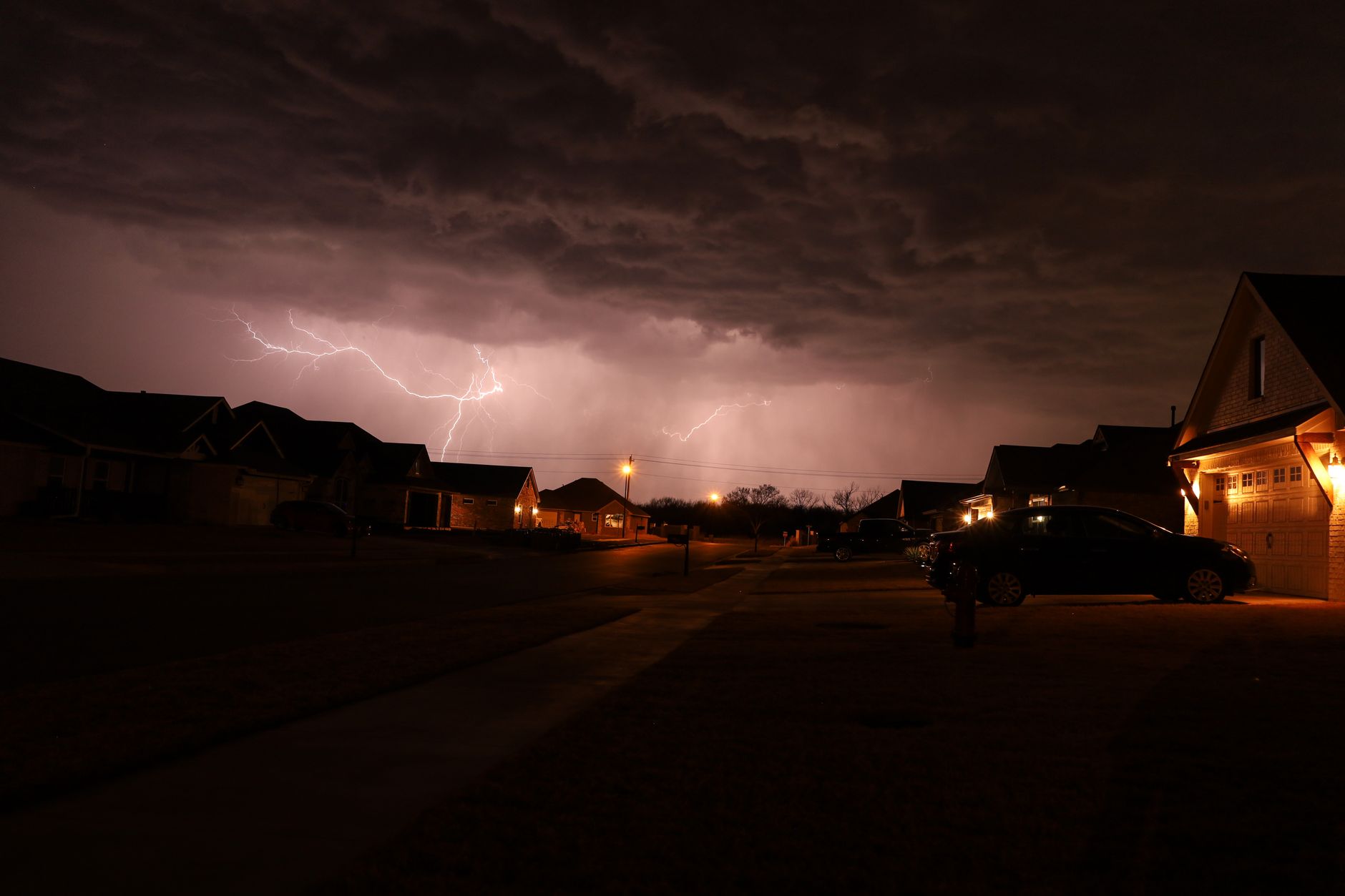
If you have lived in Houston for more than a summer or two, you know the drill. The Gulf warms up, the tropical waves start rolling off Africa, and somewhere between June and November a name on the weather map turns into shuttered stores, flooded feeder roads, and a house full of relatives waiting for the power to come back. In the middle of that scramble, the last thing on anyone’s mind is an insurance enrollment deadline. And yet those deadlines do not pause for the storm. Miss the day you were supposed to pick a health plan, sign up for Medicare, or make a change to your coverage, and under normal rules you are simply out of luck until the next window opens.
Here is the part almost nobody in Harris County knows: when a hurricane or flood is bad enough that the federal government issues a FEMA disaster declaration, that declaration can quietly open a door. Both the ACA Marketplace and Medicare have a special enrollment period built specifically for people who missed a deadline because a declared disaster got in the way. This guide explains, in plain language, exactly how those two disaster Special Enrollment Periods work, who qualifies, how long the window stays open, what proof helps, and how Wise Insurance Agency files the paperwork for you — so that a storm does not have to cost you your coverage on top of everything else. It pairs naturally with our broader guides to ACA Marketplace plans and Medicare; here we zoom in on the disaster SEP that hurricane season makes relevant every single year.
- A FEMA disaster declaration can open a Special Enrollment Period for both ACA Marketplace coverage and Medicare Advantage / Part D — for people who missed a deadline because of the disaster.
- Marketplace disaster SEP: a 60-day window. If you live (or lived) in a county eligible for FEMA individual or public assistance and a declared disaster kept you from enrolling on time, you generally have 60 days from the end of the FEMA incident period to enroll.
- The 2025 Marketplace Integrity rule did not remove the disaster SEP. Its SEP restrictions for plan year 2026 target the income-based (150% FPL) monthly SEP and income-based “exceptional circumstances” — not the FEMA-declared-disaster SEP, which remains available.
- Medicare disaster SEP (SEP DST): starts on the earliest of the incident/declaration start, and ends two full calendar months after the incident/declaration end date (whichever is later). It lets you enroll in, switch, or drop Medicare Advantage / Part D if the disaster made you miss another valid election period.
- You must have missed a real deadline because of the disaster. Both SEPs are for people who had another enrollment window during the incident and could not use it — not an open door for everyone.
- Prepare before the storm, claim after. Keep proof of address and any coverage documents somewhere safe now; after a declaration, a local agent can file the SEP for you.
What this guide covers
- Why hurricane season is an insurance issue in Houston
- What a FEMA disaster declaration actually is
- The Marketplace disaster / exceptional-circumstances SEP
- Did the 2025 Marketplace Integrity rule change it?
- The Medicare disaster SEP (SEP DST)
- Marketplace SEP vs. Medicare SEP, side by side
- Before the storm: what to have ready
- After the storm: how to claim the SEP
- Frequently asked questions
Why hurricane season is an insurance issue in Houston
The Atlantic hurricane season officially runs from June 1 through November 30 each year, according to NOAA. For a coastal metro like Houston, that is nearly half the calendar spent in the cone of possibility. The Texas Gulf Coast has one of the most active tropical histories in the country, and Harris County has been named in federal disaster declarations more than once over the years for hurricanes, tropical storms, and the catastrophic flooding they leave behind.

What makes this an insurance problem — not just a weather problem — is timing. Storms do not politely avoid enrollment deadlines. A late-season hurricane can land right in the middle of the Medicare Annual Enrollment Period (October 15 to December 7) or overlap a Marketplace deadline you were counting on. When your neighborhood is under water, your mail is not arriving, the power is out, and you are staying with family across town, a plan-selection deadline can slip past before you even realize it moved. That is precisely the situation the disaster SEP was designed for.
What a FEMA disaster declaration actually is
When a storm overwhelms state and local resources, the Governor of Texas can request that the President issue a federal declaration under the Stafford Act. The Federal Emergency Management Agency (FEMA) administers the result. There are two broad flavors that matter here, and both are published county-by-county on FEMA’s disaster declarations page:
- Individual Assistance (IA): aid available directly to residents and households — think housing help, disaster grants, and the like. When your county is designated for IA, that is the strongest signal for the disaster SEP.
- Public Assistance (PA): funding to help local governments and certain nonprofits repair public infrastructure. Counties are often designated for PA even when they are not designated for IA.
Every declaration carries an official incident period — the start and end dates FEMA assigns to the disaster event. Those dates are not a formality. As you will see, they are the clock that both the Marketplace and Medicare disaster SEPs run on. Knowing your county’s designation and the incident-period dates is the first thing an agent checks when helping you claim the SEP.
The Marketplace disaster / exceptional-circumstances SEP
On the ACA side, the disaster SEP lives inside a broader category called exceptional circumstances, at 45 CFR 155.420(d)(9). CMS has long recognized a FEMA-declared emergency or major disaster as one of those exceptional circumstances. In plain terms: if you were eligible to enroll during Open Enrollment or during another SEP, and a FEMA-declared disaster prevented you from completing that enrollment on time, you can get a special window to enroll after the fact.
Who qualifies
According to HealthCare.gov’s SEP guidance, the disaster SEP generally applies when both of these are true:
- You live in (or lived in, during the event) a county eligible for FEMA individual or public assistance. The FEMA designation for your area is what anchors eligibility.
- A declared disaster kept you from finishing an enrollment you were otherwise eligible to make — either during Open Enrollment or during another SEP you qualified for because of a life event (like a move, a marriage, or losing other coverage).
How long the window lasts
The disaster SEP typically gives you 60 days to enroll. That 60-day clock is generally counted from the end of the FEMA-designated incident period. In many cases you can also ask for your coverage to start on the date it would have started if the disaster had not gotten in the way — which can mean retroactive coverage back to the enrollment you missed. That detail matters if you had medical bills during the gap, and it is one of the things worth asking about rather than assuming.
One nuance worth flagging: even though HealthCare.gov’s public materials describe contacting the Marketplace call center to claim this SEP, you do not have to navigate that alone. Wise Insurance Agency handles disaster-SEP enrollments for Houston and Harris County residents directly — we confirm your county’s FEMA status, document the missed deadline, and submit the enrollment. Our health insurance team does this alongside the year-round Marketplace work.
Did the 2025 Marketplace Integrity rule change it?
This is a fair question, because 2025 brought real changes to Marketplace special enrollment periods. The 2025 Marketplace Integrity and Affordability Final Rule tightened several SEP-related rules. But it is important to see exactly what it touched — and what it left alone.
The rule’s headline SEP changes were aimed at income-based enrollment pathways, not disasters:
- It repealed the monthly SEP for people with projected household income at or below 150% of the federal poverty level, citing concerns about improper enrollments.
- It clarified that a change in income is not an “exceptional circumstance” under 45 CFR 155.420(d)(9) — so Marketplaces may not offer income-based SEPs under that authority.
- CMS described these SEP restrictions as applying to the 2026 plan year, with a sunset at the end of 2026.
What the rule did not do is eliminate the FEMA-declared-disaster SEP. The disaster pathway is a distinct, long-standing use of the exceptional-circumstances authority tied to a federal declaration and a defined incident period — not to a change in your income. Based on the rule’s own description of its SEP provisions, the disaster SEP remains available for people affected by a FEMA-declared emergency or major disaster. We flag this precisely because there is a lot of loose talk that “the SEPs are gone” — that overstates it. The income-based monthly SEP was curtailed for 2026; the disaster SEP was not the target.
The Medicare disaster SEP (SEP DST)
Medicare has its own version, and it works differently from the Marketplace one — so if you are on Medicare, read this section carefully. On enrollment applications it carries the election code SEP DST. It is meant for people whose Medicare Advantage or Part D enrollment was disrupted by a disaster or emergency declared by a federal, state, or local government entity — including FEMA weather emergencies and major disasters.
Who qualifies
Per CMS guidance summarized in the CMS beneficiary disaster-enrollment Q&A, you may use SEP DST if all of the following apply:
- You lived in a declared area at the start of the incident (or you do not live in the affected area but rely on someone who does — a family member, friend, or caregiver in the disaster zone — to help make your healthcare decisions).
- You had another valid election period available during the incident timeframe (for example, the Annual Enrollment Period or a different SEP).
- You did not make your election during that period because of the disaster. The SEP exists to make up for the window the disaster cost you.
When the window starts and ends
Here is the mechanic that trips people up, so it is worth stating precisely. The SEP DST starts on the earliest of the incident start date, the declaration date, or the start date identified in the declaration. It ends two full calendar months after whichever of these is latest: the end date in the declaration, the announced end of the incident, or the date the incident ends under applicable law. In short: it opens as soon as the disaster clock begins and stays open for two full months after the disaster is officially over.
What it lets you do
During SEP DST, an eligible beneficiary can generally make one election to enroll in, switch, or disenroll from a Medicare Advantage plan or a Part D prescription drug plan — the change you would have made during the election period the disaster cost you. It does not extend to everything under the sun; it restores the specific opportunity you missed. If you are weighing an Advantage plan or a stand-alone drug plan, this is the SEP that can rescue a missed Annual Enrollment Period after a storm.
Marketplace SEP vs. Medicare SEP, side by side
The two disaster SEPs solve the same human problem — a storm made you miss a deadline — but they follow different rulebooks. This comparison is the fastest way to see which one applies to you, and how the clocks differ.
| Feature | Marketplace disaster SEP | Medicare SEP DST |
|---|---|---|
| Who it is for | People enrolling in ACA Marketplace coverage | People with Medicare Advantage or Part D |
| Legal basis | Exceptional circumstances — 45 CFR 155.420(d)(9) | CMS disaster SEP guidance (election code SEP DST) |
| Trigger | FEMA individual/public assistance area + missed deadline | Federal/state/local disaster declaration + missed election period |
| Window length | Generally 60 days (from end of incident period) | From incident/declaration start to 2 full calendar months after it ends |
| Helper-in-area rule | Based on where you live/lived | Also covers those who rely on a helper living in the affected area |
| What you can do | Enroll in (or sometimes change) a Marketplace plan | Enroll in, switch, or disenroll from MA/Part D |
| Must have missed a real deadline? | Yes — an Open Enrollment or SEP deadline | Yes — another valid election period during the incident |
Before the storm: what to have ready
The single most important thing you can do is not wait until the water is rising to get organized. When a declaration eventually opens a window, claiming the SEP goes far faster if your basic paperwork is already in one place. Here is what to gather now, during the calm part of the season.
| What to keep ready | Why it helps with a disaster SEP |
|---|---|
| Proof of your Houston/Harris County address | Ties you to a FEMA-designated county — the anchor for eligibility |
| Your Medicare card and current plan details | Confirms what you have and what election period you may have missed |
| Marketplace application ID or account info | Speeds up re-entering or completing an enrollment you started |
| Notes on any deadline you were working toward | Documents the “missed because of the disaster” piece both SEPs require |
| Contact info for a helper in the area (if you rely on one) | Supports the Medicare “rely on a helper in the affected area” pathway |
| A phone number for your agent | So you can act fast once a declaration lands — 832-400-6538 |
If you would rather have a person help you build that file now — before a storm is even on the map — you can start with a quick appointment. Our team can confirm your current coverage, note any upcoming deadlines, and make sure you know who to call the moment a declaration is issued.
A storm should not cost you your coverage, too
Wise Insurance Agency helps Houston and Harris County residents get ready before hurricane season and claim the disaster Special Enrollment Period after a FEMA declaration — for both Marketplace and Medicare coverage. We confirm your county’s status, document the missed deadline, and file it for you.
Call our Houston offices 832-400-6538After the storm: how to claim the SEP
Once the immediate danger has passed and you have a moment to breathe, here is the path we walk Harris County clients through to actually put a disaster SEP to use.
- Confirm your county is in the declaration. We check FEMA’s declaration list to see whether your county was designated for individual or public assistance, and we pull the incident-period start and end dates. Those dates drive everything.
- Pin down the deadline you missed. Whether it was Open Enrollment, the Medicare Annual Enrollment Period, or another SEP, we identify the specific window the disaster kept you from using — because both SEPs require that missed opportunity.
- Pick the right SEP. If you are enrolling in a Marketplace plan, we use the exceptional-circumstances disaster SEP. If you are making a Medicare Advantage or Part D change, we use SEP DST. Which one applies depends on your coverage, not your preference.
- Gather light documentation. Proof of your address in the declared county, your existing coverage, and — for the Medicare helper pathway — confirmation that you rely on someone in the affected area. Attestation is central; keep whatever supports it.
- File within the window. We submit the enrollment or election inside the SEP’s timeframe: generally 60 days from the incident end for the Marketplace, or up to two full calendar months past the incident/declaration end for Medicare.
Throughout, our role is to keep the insurance side from becoming one more thing you have to fight. We do not decide whether a disaster was declared — FEMA does — but we know how to read the declaration, match it to the right SEP, and get your enrollment in before the window closes. You can reach our team by phone at 832-400-6538, by email at sara@wisehealthins.com, or through our contact page.
We work with residents in person across the metro — at our North Houston office and our South Houston office — whether you are on Original Medicare, in a Medicare Advantage plan, or covered through the Marketplace. Hurricane season is a fact of life on the Gulf Coast; losing your coverage over it does not have to be.
Frequently asked questions
Does a hurricane automatically let me change my health insurance?
How long is the Marketplace disaster Special Enrollment Period?
Did the 2025 Marketplace Integrity rule get rid of the disaster SEP?
What is the Medicare SEP DST, and how long does it last?
Who qualifies for the Medicare disaster SEP?
Do I have to prove the disaster affected me?
Which counties count — is Harris County usually included?
What if I already missed my deadline — is it too late?
Sources
- HealthCare.gov — Special Enrollment Periods for Complex Issues (natural disaster / FEMA SEP) (accessed July 2026).
- CMS — 2025 Marketplace Integrity and Affordability Final Rule (fact sheet) (accessed July 2026).
- CMS — Enrollment Issues for Weather-Related Emergencies — Disaster SEP Q&As for Beneficiaries (accessed July 2026).
- CMS — Special Election Issues for Individuals Affected by Declared Disasters (SEP DST) (accessed July 2026).
- FEMA — Disaster Declarations (county designations, incident periods, Individual/Public Assistance) (accessed July 2026).
- NOAA — Atlantic hurricane season dates (June 1–November 30) (accessed July 2026).
- eCFR — 45 CFR 155.420 — Special enrollment periods (exceptional circumstances, (d)(9)) (accessed July 2026).
Wise Insurance Agency is a licensed insurance agency in the State of Texas. The information here is general guidance and not a substitute for plan-specific advice. Whether a disaster Special Enrollment Period applies depends on the specific FEMA (or other government) declaration, its incident-period dates, your county’s designation, and your individual circumstances. We do not offer every plan available in your area. Any information we provide is limited to those plans we do offer in your area. Please contact HealthCare.gov, Medicare.gov, 1-800-MEDICARE, or your local State Health Insurance Assistance Program (SHIP) to get information on all of your options. Enrollment windows, eligibility criteria, and Marketplace and Medicare rules reflect CMS, HealthCare.gov, and FEMA program materials as of the date this article was written and may change. Verify current rules with CMS, HealthCare.gov, FEMA, your plan, or a licensed agent before relying on them.